
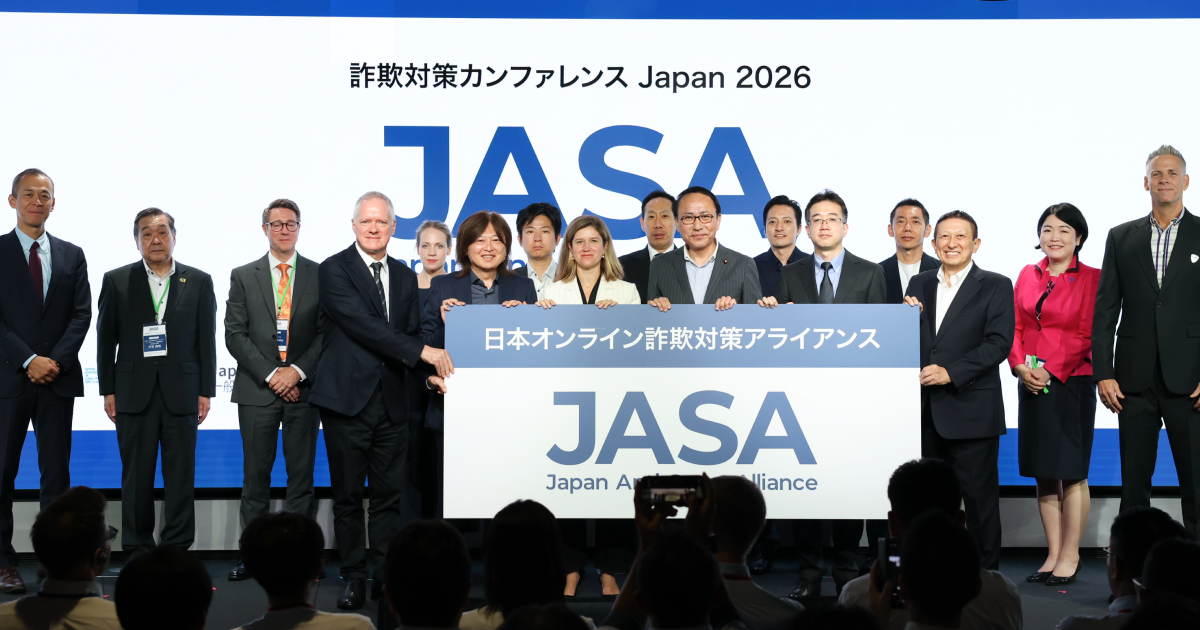
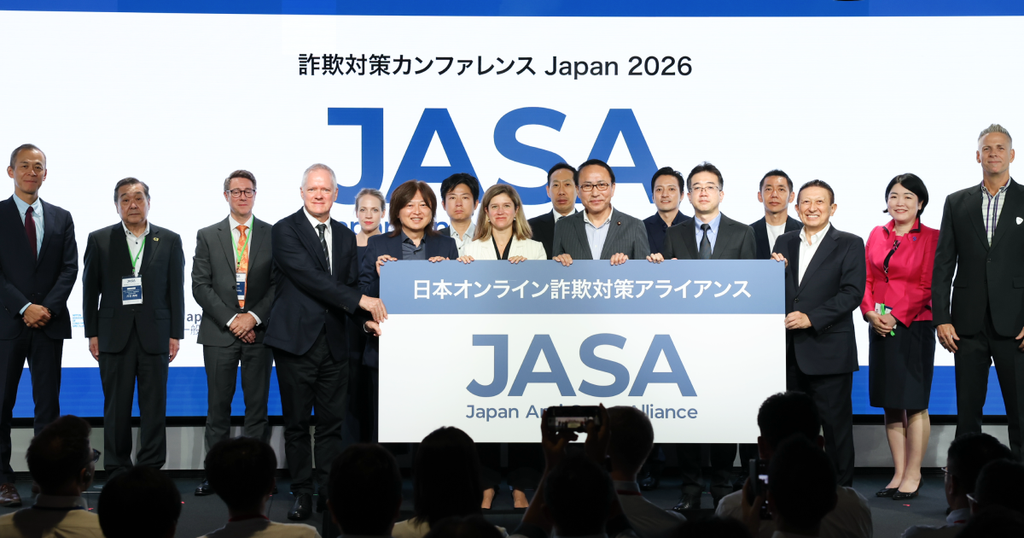
On August 26, 2026, the Japan Trust & Safety Association (JTSA) held Anti-Scam Conference Japan 2026 at Google’s Shibuya office in Tokyo. The event welcomed 282 attendees and featured 38 speakers from nine countries, including representatives of three Japanese government agencies. It marked the official launch of the Japan Anti-Scam Alliance (JASA) and the announcement of new partnerships in Japan and overseas.
JASA is a neutral, non-profit alliance that aims to share knowledge and information on online scams across the public and private sectors, industries and borders, and to turn it into joint action. With JTSA serving as its secretariat, JASA connects businesses, industry associations, consumer organizations, researchers, government agencies and anti-scam organizations overseas.
Online scams rarely stay within a single service. Scammers reach victims through social media, ads, SMS or phone calls, draw them in through messages and calls, and then take their money through bank accounts and payment services. Many different services and industries are involved along the way.
Preventing harm therefore takes more than each company’s own measures. It requires connecting the knowledge and information each player holds, and designing countermeasures across the whole journey of a scam, from the entry point to the exit.
JASA was conceived after the first Anti-Scam Conference Japan in May 2025, through ongoing discussions with organizations working against online scams in Japan, as a neutral forum for sharing knowledge, without favoring any particular organization’s interests. This year’s conference served as the stage for its official launch and for introducing its first concrete partnerships.
- Morning Session | Launching JASA and Announcing Partnerships at Home and Abroad
- JASA’s starting point: bringing knowledge together across industries
- Connecting with the global anti-scam network
- The state of scams in Japan, and messages from government and policymakers
- Morning panel | Expectations for the JASA Launch
- International case studies | The UK, Australia and the United Nations
- Afternoon Session | Following a Scam from “Contact” to “Money Transfer”
- Related sessions | Sharing the current state of scams and the big picture of countermeasures
- Panel 01 | Healthy Information Distribution in the Digital Space and Public-Private Partnership
- Panel 02 | Preventive Measures Against Target Isolation from Induction Tactics
- Panel 03 | Understanding Victim Psychology and Effective Awareness-Raising
- Panel 04 | Issues in Payment-Side Countermeasures and the Necessity of Early Information Sharing
- Three Cross-Industry Challenges That Emerged Over the Day
- From Alliance to Action | JASA’s Next Steps
- Event Overview
Morning Session | Launching JASA and Announcing Partnerships at Home and Abroad
JASA’s starting point: bringing knowledge together across industries
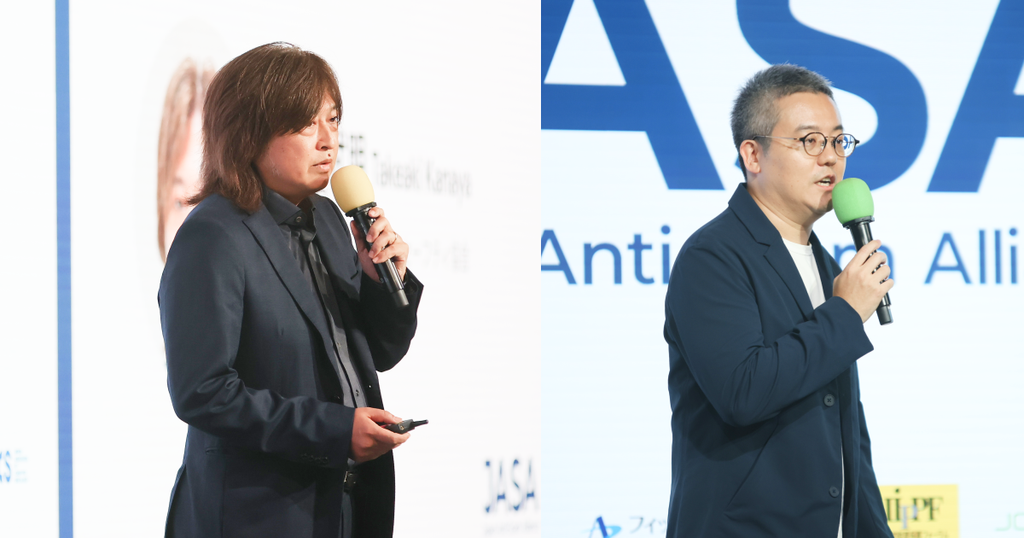
The morning session opened with remarks from Takeaki Kanaya, Representative Director of JTSA, and Kiyotaka Tanaka, Director and Secretary General of JTSA. They announced the official launch of JASA and outlined its approach: advancing cross-industry countermeasures while respecting and complementing the work of existing industry associations and individual companies.
Through “One Team” collaboration that reaches beyond companies, industries and government, JASA aims to build a coordinated platform for tackling online scams in Japan. By working with partners in Japan and overseas, JASA will share knowledge between Japan and the world, share practical experience from Japan with partners across Asia and beyond, and contribute to the advancement of international efforts against online scams.
JASA’s founding concepts
- Faster than Scam.
- One Team, Next Move.
- From Alliance to Action.
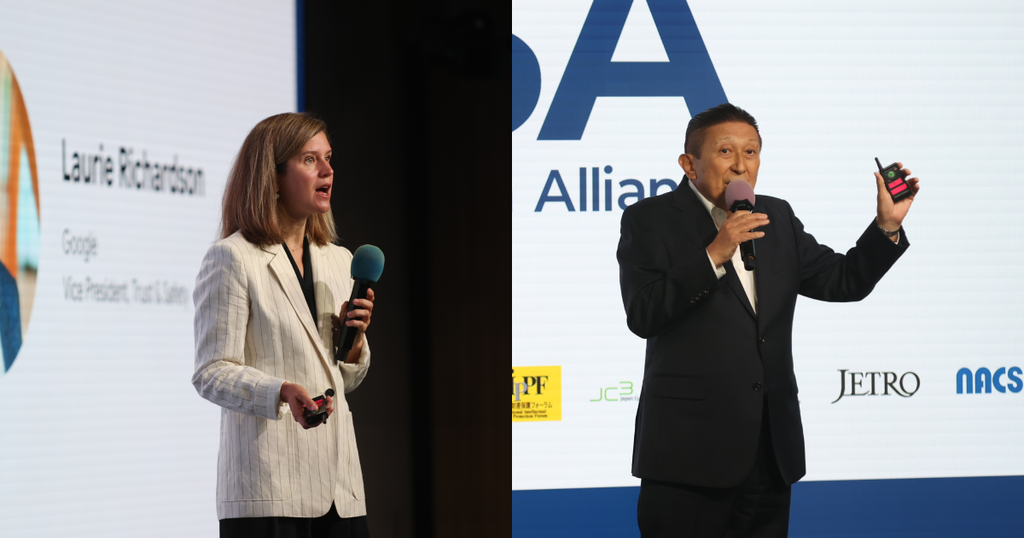
This was followed by partner speeches from Laurie Richardson of Google and Akihiko Omikawa of Trend Micro.
Speakers
- Laurie Richardson | VP, Trust & Safety, Google
- Akihiko Omikawa | Executive Vice President, Trend Micro
Both companies, which are actively working against online scams, shared their views on the significance of the conference and the alliance.
Connecting with the global anti-scam network
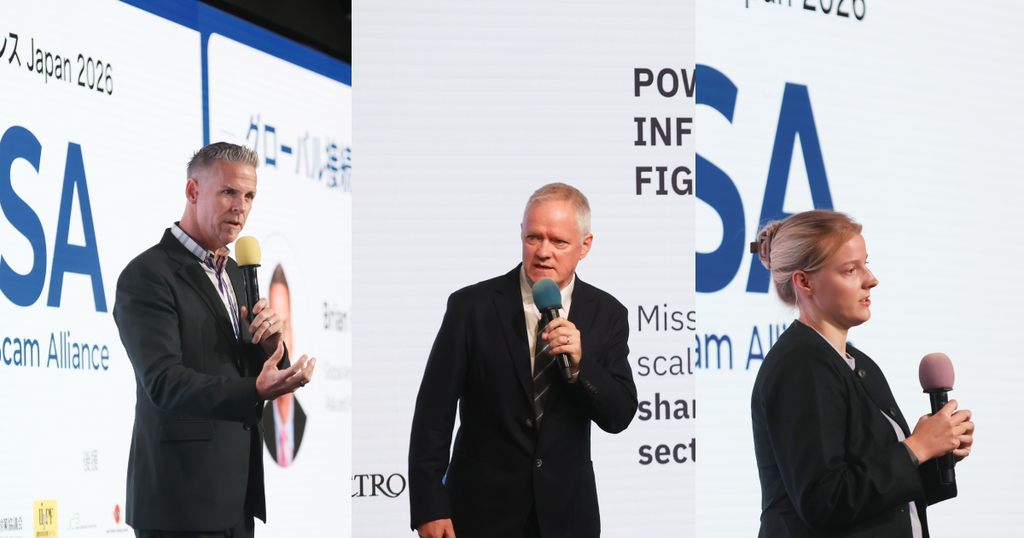
The global connection session introduced JASA’s collaboration with anti-scam organizations overseas. At the conference, JASA announced strategic partnerships with three organizations: the Global Signal Exchange (GSE), the Global Anti-Scam Alliance (GASA) and the Global Coalition to Fight Financial Crime (GCFFC).
Speakers
- Lucien Taylor | CTO, GSE
- Katie Miles | Operations Manager, GSE
- Brian Hanley | Asia and Pacific Director, GASA
- Debra Au | Chair, Asia Pacific Chapter, GCFFC (online)
- Kiyotaka Tanaka | Director and Secretary General, JTSA (moderator)
The session presented the following initiatives, which connect insights gained in Japan with the world, and bring knowledge of scam tactics and countermeasures identified overseas to Japan.
- Collaboration with GSE: Promoting the sharing of scam signals in Japan and internationally, built on GSE. As an initial step, the International Intellectual Property Protection Forum (IIPPF) and Google have launched a pilot to share signals related to scam ads.
- Collaboration with GASA: Working with GASA, an international anti-scam alliance, to support the rollout of its initiatives in Japan and share the latest insights from Japan and abroad.
- Collaboration with GCFFC: A strategic partnership with an international framework against financial crime, expanding JASA’s cooperation overseas.
Here, “signals” refers to clues that help detect and counter scams, such as suspicious domains. Sharing such information across organizations and borders enables earlier action to prevent harm.
The state of scams in Japan, and messages from government and policymakers
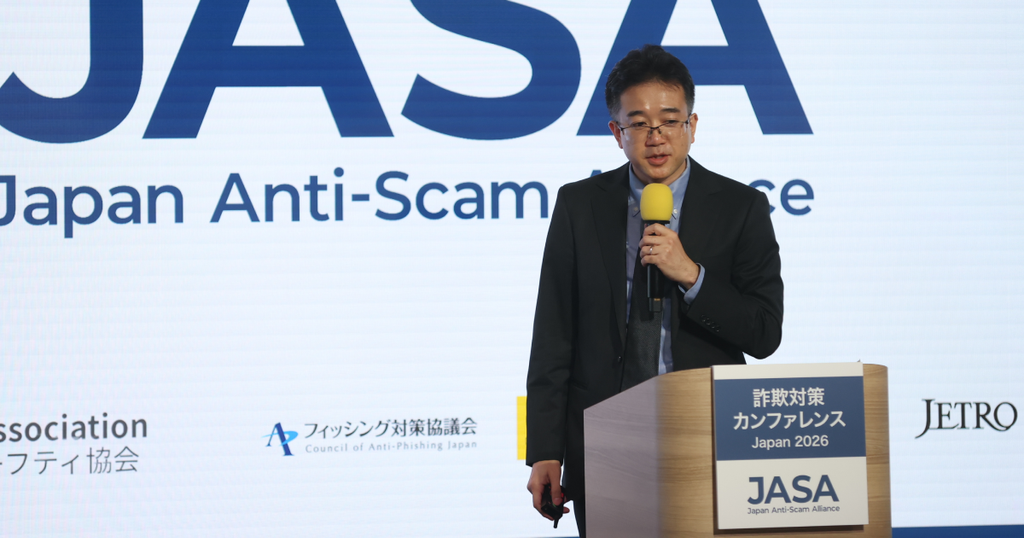
Junichiro Kan, Councillor, Commissioner General’s Secretariat, National Police Agency, then gave a keynote on the current state of scams in Japan and the measures being taken, with the latest statistics.
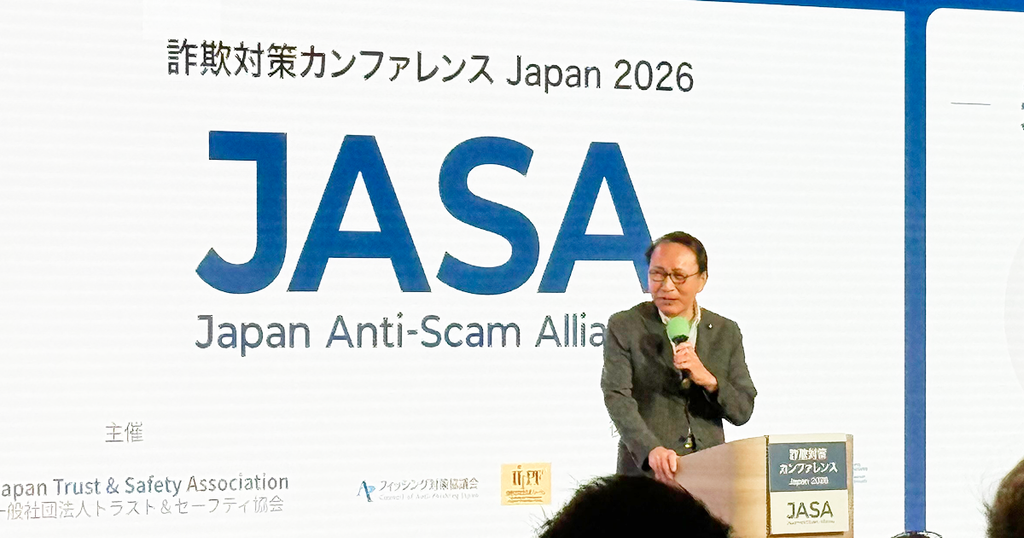
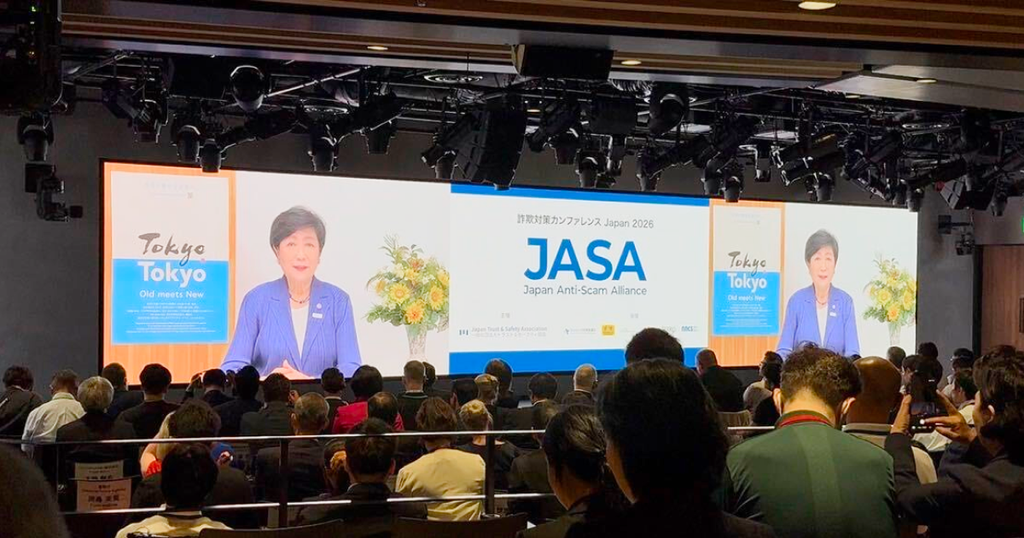
As a guest speaker, Yasuhiro Hanashi, Member of the House of Representatives, spoke about the significance of JASA’s cross-sector, public-private approach and his expectations for the future: “JASA, launched today, is very timely. We in politics and government want to work together with all of you.” Tokyo Governor Yuriko Koike also sent a video message congratulating JASA on its launch and sharing her expectations.
Morning panel | Expectations for the JASA Launch
In the morning panel, speakers from Google, Trend Micro and JTSA discussed the role JASA is expected to play.
Speakers
- Laurie Richardson | VP, Trust & Safety, Google
- Akihiko Omikawa | Executive Vice President, Trend Micro
- Kiyotaka Tanaka | Director and Secretary General, JTSA (moderator)
How can each company’s own countermeasures be linked with cross-industry cooperation against ever-changing scams? The session looked ahead to JASA’s future, touching on technical countermeasures, efforts that support users’ understanding and behavior, and the need to design collaboration that draws on global standards while reflecting the situation in Japan.
International case studies | The UK, Australia and the United Nations
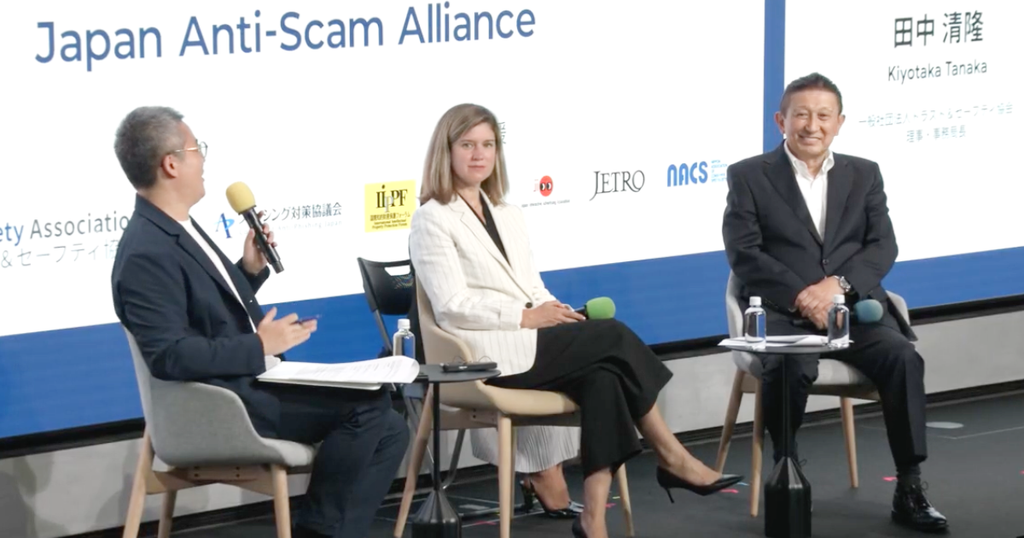
The morning closed with case studies and international challenges presented by speakers from the UK, Australia and the United Nations.
Speakers
- Mike Haley | Chief Executive, Cifas (UK)
- Jayde Richmond | General Manager, National Anti-Scam Centre (NASC) (Australia, online)
- Gen Nakatomi | Programme Development Officer, United Nations Office on Drugs and Crime (UNODC), Regional Office for Southeast Asia and the Pacific
Through the work of each country and organization, the speakers shared perspectives on linking domestic countermeasures with insights from abroad. The session was an opportunity to consider why it matters for Japanese businesses and institutions to connect to international networks in the face of scams that operate across borders.

Afternoon Session | Following a Scam from “Contact” to “Money Transfer”
Building on the framework for collaboration set out in the morning, the afternoon session explored where exactly that collaboration is needed.
The discussion was organized around the scam “kill chain.” Treating the journey from first contact with a victim, through manipulation and isolation, to the transfer of money as one connected process, the sessions explored the measures needed to stop harm at each stage.
The afternoon session was closed to the media so that practitioners could speak candidly. This report does not go into individual remarks or the details of the discussions; instead, it introduces the speakers and the main themes of each session.
Related sessions | Sharing the current state of scams and the big picture of countermeasures
Ahead of the four panels, two sessions covered the state of scams in Japan and globally, and countermeasures along the scam kill chain.
“Current State of Scams Globally and in Japan” speakers
- Kenichiro Motono | Chief Analyst, Consumer Solution Expert Department, Trend Micro
- Brian Hanley | Asia and Pacific Director, GASA

“The Scam Kill Chain and the Forefront of Countermeasures” speakers
- Kentaro Matsumoto | Lead, Policy & Public Affairs, Governance Domain, LY Corporation
- Kiyotaka Tanaka | Director and Secretary General, JTSA (moderator)
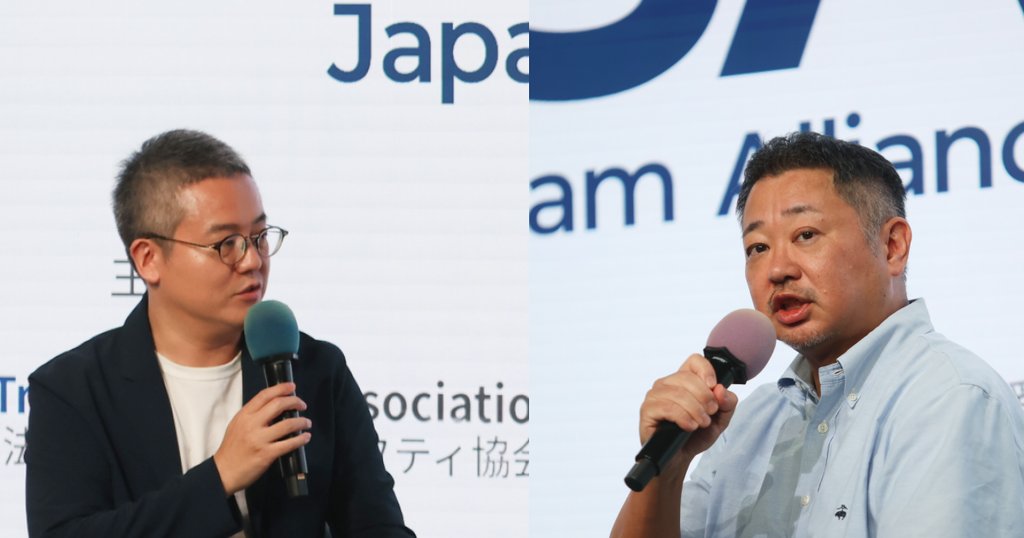
These two sessions set out the current state of scams and the overall picture of countermeasures. The panels that followed focused on four areas: contact, manipulation, victim psychology and payments.
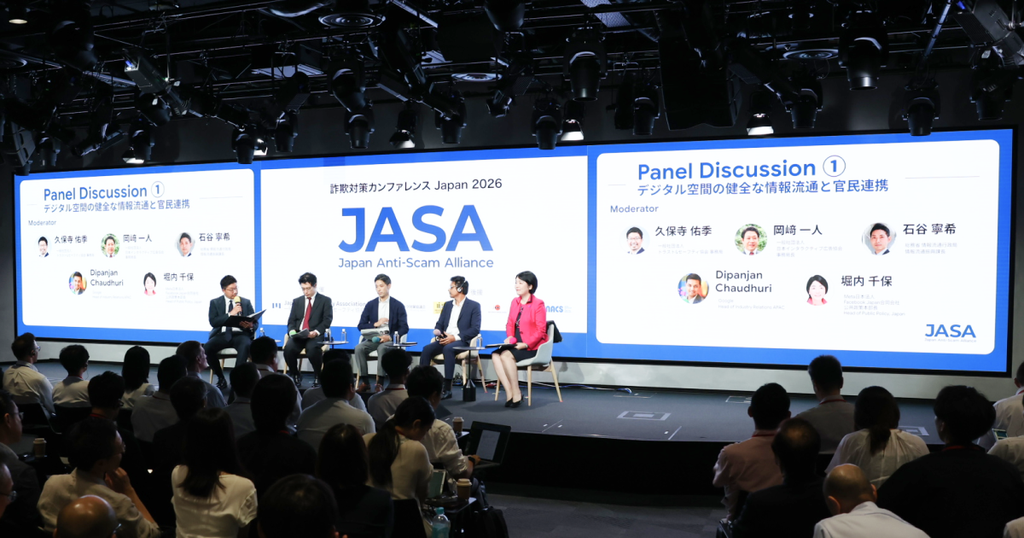
Panel 01 | Healthy Information Distribution in the Digital Space and Public-Private Partnership
Speakers
- Yasuyuki Ishitani | Director, Information Distribution Promotion Division, Information and Communications Bureau, Ministry of Internal Affairs and Communications
- Kazuto Okazaki | Secretary General, Japan Interactive Advertising Association (JIAA)
- Dipanjan Chaudhuri | Industry Relations APAC Lead, Google
- Chiho Horiuchi | Head of Public Policy, Meta
- Yuki Kubotera | JASA Secretariat (moderator)
The first panel addressed measures against scam ads and fake accounts at the entry point, the “contact” stage.
Even as screening and detection improve, scammers adapt their tactics and shift to other channels. The discussion emphasized the importance of moving beyond measures taken by individual businesses toward coordinated action across industries and between the public and private sectors.
Panel 02 | Preventive Measures Against Target Isolation from Induction Tactics
Speakers
- Fumi Kojima | Head of Special Scam Countermeasures Office, Organized Crime Investigation Division 2, National Police Agency
- Kimiaki Nishida | Professor, Faculty of Psychology, Rissho University
- Yutaka Tsuge | Security Researcher, Tobila Systems
- Tsukasa Takeuchi | Vice President, Cyber Security Department, Mizuho Financial Group
- Tsuyoshi Kino | Director, JP Consumer Business Promotion, Trend Micro (moderator)
The second panel focused on how scammers manipulate victims and isolate them by keeping them from consulting people around them.
At which touchpoints can we intervene before a victim sends money? Bringing together insights from psychology and practical perspectives from finance and telecommunications, the panel discussed how to prevent isolation.
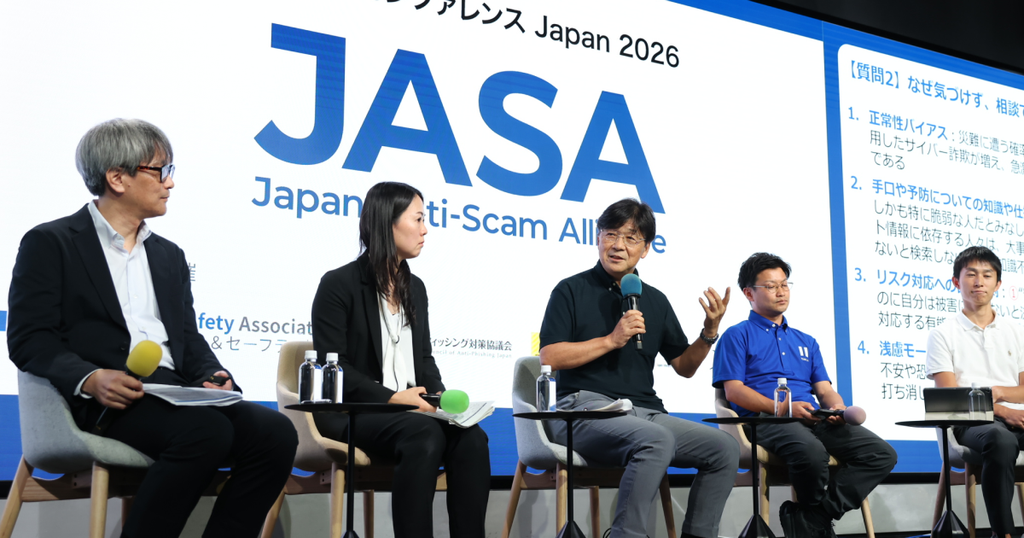
Panel 03 | Understanding Victim Psychology and Effective Awareness-Raising
Speakers
- Noriaki Niwa | Vice President, Nippon Association of Consumer Specialists (NACS)
- Taiji Watanabe | Chief Operations Director, Japan Cybercrime Control Center (JC3)
- Akssenya Beedassy | Outreach & Partnerships, Trust & Safety, TikTok
- Kimiaki Nishida | Professor, Faculty of Psychology, Rissho University (moderator)
The third panel explored how insights into victim psychology can help turn awareness into protective action.
The main themes were how to reach users who think “it won’t happen to me,” the timing of warnings just before actions such as sending money, and designing paths that lead people to the right place to seek help.
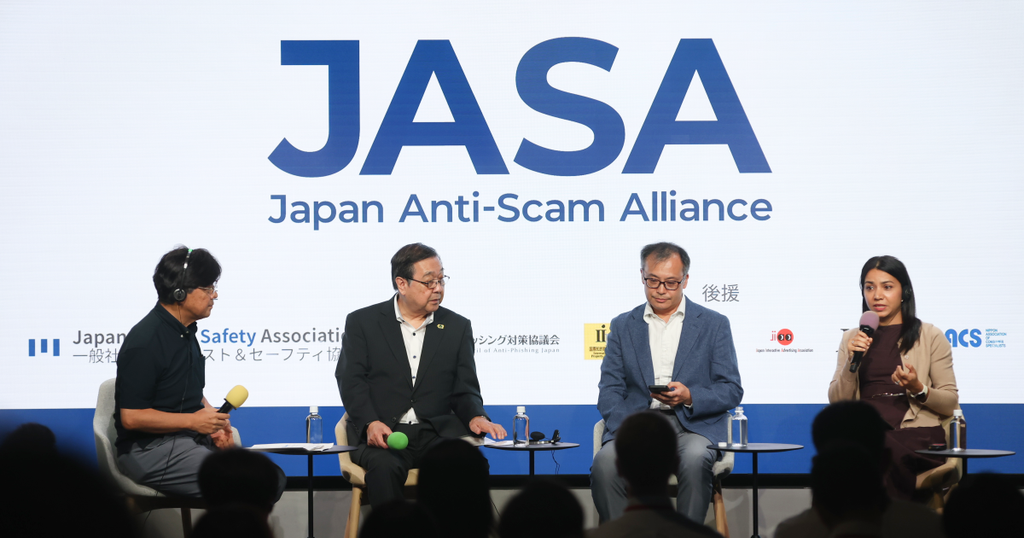
Panel 04 | Issues in Payment-Side Countermeasures and the Necessity of Early Information Sharing
Speakers
- Yugo Kobayashi | Specialist Inspector, Financial Services Agency
- Lucien Taylor | CTO, GSE
- Katie Miles | Operations Manager, GSE
- Sophie Lennox | Director of Products, Cifas
- Shinya Ueki | Senior Manager, Trust and Safety Program Management, Merpay
- Shigeru Yotoriyama | Retired Senior Commissioner, National Police Agency of Japan; Invited Researcher, Waseda Institute of the Policy of Social Safety, Waseda University (moderator)
The final panel focused on the payment stage, where money actually moves.
Even when a suspicious transaction is detected, a single company’s information is often not enough to judge whether it is a scam. Referring to information-sharing schemes overseas, the panel discussed the legal and practical conditions for sharing information early across industries.
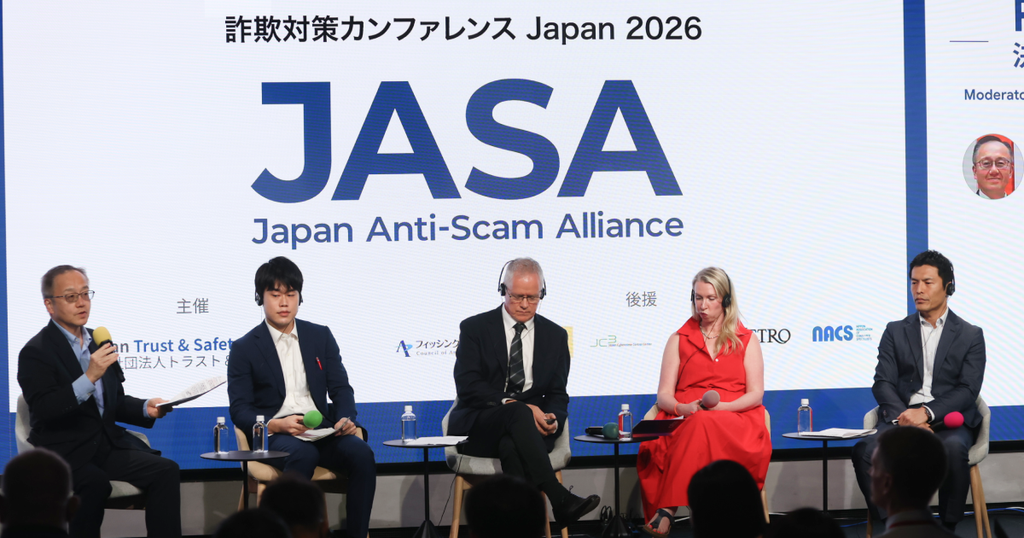
Three Cross-Industry Challenges That Emerged Over the Day
Although each session addressed a different area, a common thread ran through them all: the difficulty of tackling scams within the boundaries of a single company or industry.
1. Entry points are dispersed; exit points are concentrated
The entry points of scams are spread across social media, ads, SMS, phone calls and more. The exit points that lead to financial loss, on the other hand, are concentrated in bank accounts, payment services and crypto assets.
Rather than treating entry and exit points separately, countermeasures need to be designed with the whole scam kill chain in view, connecting the information gained at each touchpoint to create more opportunities to stop harm.
2. Sharing information only after harm occurs is too late
In addition to responding once harm has come to light, it is important to share the clues that appear before harm occurs.
Information such as suspicious domains, phone numbers or bank accounts may be hard to judge on its own, but combined with information from other businesses, it can enable earlier action. The mechanisms and operating conditions for such sharing need to be put in place.
3. Domestic countermeasures and international cooperation cannot be separated
The infrastructure and criminal organizations behind scams operate across borders. Information identified in Japan needs to reach partners overseas, and tactics identified overseas need to inform countermeasures in Japan.
Bringing anti-scam organizations from overseas and stakeholders in Japan together in one place was a step toward building that connection.
What these three challenges have in common is that information sharing and coordinated countermeasures stop at organizational boundaries. JASA will complement the work of companies, associations, government and overseas organizations, and connect the knowledge each of them holds to joint action.
From Alliance to Action | JASA’s Next Steps
At the closing, Kiyotaka Tanaka, Director and Secretary General of JTSA, and Takayasu Matsuda, Vice Representative Director of JTSA, took the stage to share JASA’s plans going forward.
At the conference, JASA reported its early achievements, including strategic partnerships with three international organizations, collaboration with JIAA, JC3, NACS, IIPPF and others, and the signal-sharing pilot between IIPPF and Google.
Building on these partnerships, JASA plans to move forward with the following initiatives.
JASA Signal Exchange Pilot
JASA will launch a pilot built on GSE to share scam signals among businesses in Japan and internationally. The initiative connects the clues each business identifies and puts them to use for early, cross-industry action.
Japan Scam Data Research
JASA will conduct a study of scams in Japan. By capturing the reality across the entire scam kill chain, including hidden harm that does not appear in officially reported case numbers, it aims to provide a foundation for countermeasures and policy discussions.
Industry-wide awareness-raising
JASA will coordinate effective, industry-wide awareness-raising that reflects the latest insights and trends, working with many organizations to tell consumers clearly what to watch out for right now and how to protect themselves.
Participation in the Global Anti-Scam Summit Asia 2026
JASA plans to take part in the Global Anti-Scam Summit Asia 2026 in Bangkok on November 10–11, 2026, to share Japan’s efforts with the international community and further advance international cooperation through dialogue with stakeholders overseas.
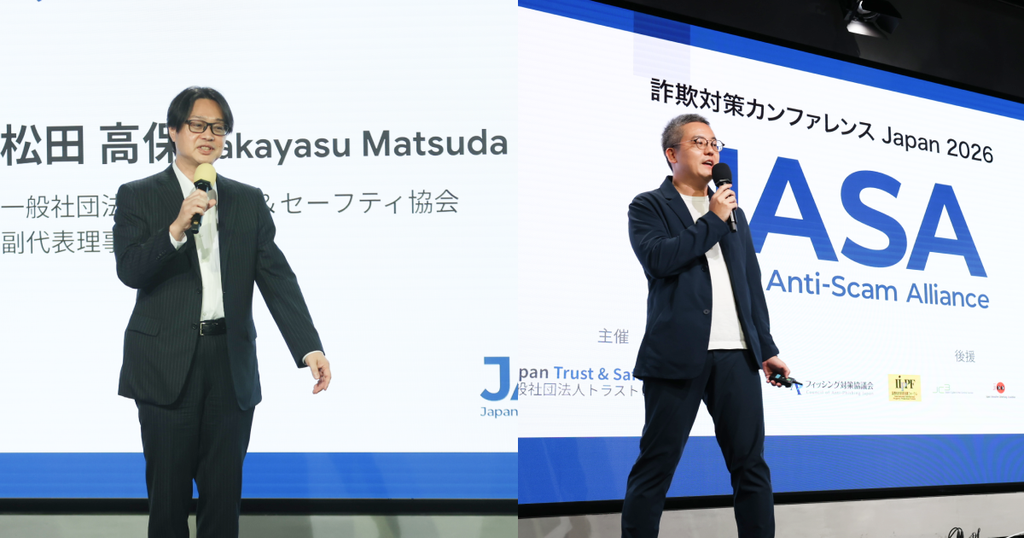
Anti-Scam Conference Japan 2026 marked the official launch of JASA and helped identify where collaboration across the public and private sectors, industries and borders is needed.
Going forward, JASA will continue its dialogue with the relevant government agencies and, together with participating companies, organizations and overseas partners, turn shared knowledge into concrete action.
Event Overview
| Item | Details |
| Event | Anti-Scam Conference Japan 2026 |
| Date | Wednesday, August 26, 2026 |
| Venue | Event space, Google Shibuya office, Tokyo |
| Organizer | Japan Trust & Safety Association (JTSA / JASA Secretariat) |
| Endorsed by | ・Japan External Trade Organization (JETRO) ・Japan Cybercrime Control Center (JC3) ・Nippon Association of Consumer Specialists (NACS) ・International Intellectual Property Protection Forum (IIPPF) ・Council of Anti-Phishing Japan ・Japan Interactive Advertising Association (JIAA) |
| Attendees | 282 |
| Speakers | 38(from nine countries and three Japanese government agencies) |
| Morning session | JASA launch announcement, partner speeches, global connection session, keynote by the National Police Agency, guest remarks, morning panel, international case studies (open to media) |
| Afternoon session | Four panel discussions along the scam kill chain and related sessions, introduction of JASA’s next steps (closed to media) |
For more information about JASA, please visit the official website.